Scanimate vs Video Synthesis
スキャニメイト / ビデオ・シンセシス
Scanimate comes from Broadcast Design and Video Synthesis from Experimental Film. They are reached for with some of the same intent, which is where they get confused.
Scanimate
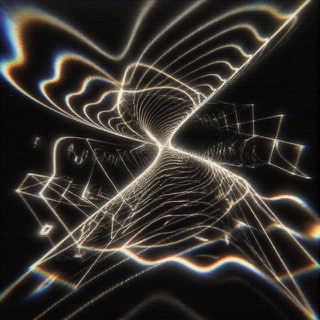
An analog video synthesizer that distorted images on a CRT electrically and in real time. It is the true source of the glowing, flying, undulating logos of 1970s and 80s television, and it carried the motion industry before digital.
Video Synthesis
.jpg)


Generating and modulating the video signal itself like an instrument. Nam June Paik and Shuya Abe's synthesizer turned the television from receiver into raw material, opening video art's technical ground.
| Scanimate | Video Synthesis | |
|---|---|---|
| Era | 1969–1980s | 1969– |
| Family | Broadcast Design | Experimental Film |
| Kind | Technique | Technique |
| Cues | Glowing outlines / Electronic undulation / Rainbow glow / Scanline texture | Modulated signal / Feedback vortices / Waveforms made visible / Television sets repurposed |
| Best used for | Rebuilding the air of 1970s and 80s television as a deliberate effect · Giving a logo the unstable glow and stretch that digital tools lack | Live stage visuals generated in time with the performance itself · Work that uses the signal as its material instead of recorded footage |
| Type | Heavy single letters lit from inside their own outline | Distort letters as signal, moving between legible and collapsed |
| Composition | One element on black, stretched from far to near | Symmetrical feedback around the center, vortex speed setting composition |
| Material | Scanlines and rainbow bleed, with color fringing left on the edges | Color from oscillator waveforms, layers from camera and monitor recursion |
| Caution | Layering glow and scanlines on top while the undulation itself still moves with the smooth interpolation of today's tools. | Stopping the moment feedback throws up a pretty accident, then stringing accidents together without learning which control produces which image. |