Fashion Deconstruction vs Grunge Fashion
ファッションの脱構築 / グランジ・ファッション
Fashion Deconstruction comes from Fashion History and Grunge Fashion from Subculture Style. They are reached for with some of the same intent, which is where they get confused.
Fashion Deconstruction
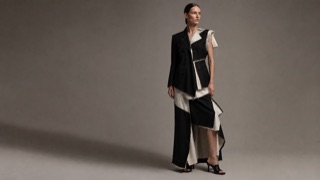
Exposes seam allowance, lining, raw edge, pattern and asymmetric joining instead of hiding clothing as a seamless whole. It does not merely destroy; it dismantles conventions and builds a different body from their parts.
Grunge Fashion

Grunge fashion grew from mismatched, layered secondhand and work clothing in the Pacific Northwest music scene before its early-1990s runway translation; flannel, worn knits, boots and displaced hems became an answer to polished luxury.
| Fashion Deconstruction | Grunge Fashion | |
|---|---|---|
| Era | 1980s– | late 1980s–1990s |
| Family | Fashion History | Subculture Style |
| Kind | Style | Style |
| Cues | Seam allowances and lining turned outward / Raw edges and deliberate fraying / Asymmetric joins and displaced balance / Patterns and interfacing treated as finished surfaces | Oversized checked flannel worn open in layers / Pilled knit, thrifted dress and distressed denim mixed / Heavy work boots and off-body sizing / Muddy earth tones and washed black layered together |
| Best used for | Collections where garment structure and making are the subject · Clothes and displays that value assembly and repair traces over polished finish | Building an unpolished counter-image for music, magazines and styling · Turning secondhand utility clothing and wear into value through new combinations |
| Type | Leave labels, basting thread and pattern notation visible as part of the structure. | Keep distressed sans or typewriter copy small and let layering lead. |
| Composition | Break symmetry so joins and excess cloth draw another contour around the body. | Place oversized shirts and knits over narrow inner layers, displacing shoulder and hem lines. |
| Material | Expose lining, interfacing, seams and cut edges so the order of assembly can be read. | Use washed flannel, pilled knit, faded denim and dull leather, avoiding new gloss. |
| Caution | Torn and frayed cloth alone is not deconstruction. The viewer must see what convention was dismantled and what replaced it. | Buying pre-ripped clothes misses the point. Preserve the distance from fashion that came from thrift, utility and a regional music culture. |