Direct Animation vs Silhouette Animation
ダイレクト・アニメーション / シルエット・アニメーション
Direct Animation comes from Experimental Film and Silhouette Animation from Animation Techniques. They are reached for with different intent, which is the fastest way to tell them apart.
Direct Animation

Images made without a camera, by drawing, scratching and pasting directly onto the filmstrip. The film stock itself becomes the brushstroke and the rhythm.
Silhouette Animation
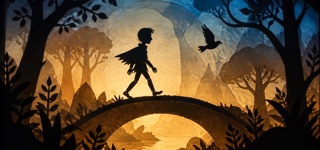
Silhouette animation moves jointed black card figures one frame at a time on an underlit glass table. The films of Lotte Reiniger joined shadow play, cut paper and cinema into a language that tells through contour and gesture.
| Direct Animation | Silhouette Animation | |
|---|---|---|
| Era | 1935– | 1910s– |
| Family | Experimental Film | Animation Techniques |
| Kind | Technique | Technique |
| Cues | Hand-drawing on film / Scratched marks / Continuity that ignores frames / Physical blots of color | Sharp outer contours enclosing fully black figures and plants / Limbs segmented by wire or lead joints / Black foregrounds against pale or layered translucent backgrounds / Profile gestures exaggerating fingers, chins and garment edges |
| Best used for | Short experimental films and titles that put the material itself in front · Abstract runs of color and scratch cut by hand to a piece of music | Telling fable and myth through posture and outline rather than facial detail · Uniting figures, lettering and plants in one black-shape system for title sequences |
| Type | Write letters by hand one frame at a time and keep the drift | Cut lettering as solid shapes too, prioritizing open counters and readable contour over fine ornament. |
| Composition | Ignore the frame line and pull marks as long continuous bands | Turn figures to profile and leave room in the direction of hand, face and movement. Move foreground, middle and pale background as separate layers. |
| Material | Paint onto clear stock, scratch into black, and switch between them | Cut black card, articulate it with small joints, and photograph it on glass lit from below. Layer tissue or translucent material behind it. |
| Caution | Laying one scanned scratch texture over the footage so the dirt sits still instead of changing every single frame. | This is not an illustration filled with black. Cuttable contour, articulated joints and transmitted-light layers must form one system of movement. |