Spirit Photography vs Tableau Photography
心霊写真 / タブロー写真
Spirit Photography comes from Photographic Genres and Tableau Photography from Photography Movements. They are reached for with some of the same intent, which is where they get confused.
Spirit Photography
.jpg)


The 19th-century trade in ghosts produced by double exposure. From Mumler's portrait of Lincoln's widow to the séance boom, it fed on the very belief that a photograph proves something, a style built from media deception and desire.
Tableau Photography
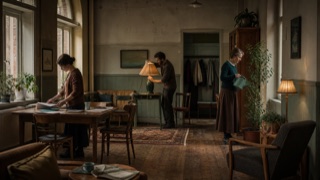
Assembles the scene before the shutter and holds it in a single print made to hang like a painting, its figures acting as if no viewer were there.
| Spirit Photography | Tableau Photography | |
|---|---|---|
| Era | 1862–1930s | 1970s |
| Family | Photographic Genres | Photography Movements |
| Kind | Style | Style |
| Cues | Translucent superimposed figures / Composites with mourning portraits / The séance-record format / Staged evidentiality | A single large print made to hang / Figures who never look back at you / Interiors and streets built to the last corner / Lighting borrowed from cinema |
| Best used for | Horror and ghost story promotion that borrows the look of a genuine record · Exhibits and teaching material about how much a photograph proves | Restaging the conventions of advertising or news images to cast doubt on them · Building a story into one frame meant for exhibition, not for record |
| Type | Add a handwritten date and a testimony like line in printed form | Make the text in the frame as a prop rather than borrowing a typeface |
| Composition | A frontal portrait of the living with the figure half over the shoulder | Fix gaze and hand positions in advance and block the frame like a painting |
| Material | Double expose at low density and blur the edge until it vanishes | Built sets or models, cinematic lighting, large format shot and printed big |
| Caution | The ghost gets rendered sharp and finished as artwork, which destroys the one condition the style needs, that a believer could read it as accident. | Staging that only imitates a natural record leaves the assumption that photographs record reality untouched, and the whole reason for constructing the scene disappears. |