Post-Internet Art vs Superflat
ポスト・インターネット・アート / スーパーフラット
Post-Internet Art comes from Digital Culture and Superflat from Japanese Postwar Avant-garde. One is aesthetic and the other style. They are reached for with some of the same intent, which is where they get confused.
Post-Internet Art
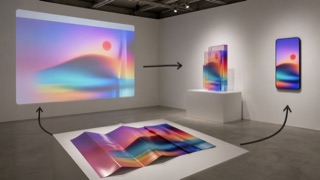
Post-Internet art treats the internet as an ordinary condition of life and production, turning the circulation between online images, objects, exhibitions and documentation into the work.
Superflat


Juxtaposes anime, manga, advertising and traditional painting on one flat plane, questioning the border of high art and consumer culture.
| Post-Internet Art | Superflat | |
|---|---|---|
| Era | 2000s– | 2000s– |
| Family | Digital Culture | Japanese Postwar Avant-garde |
| Kind | Aesthetic | Style |
| Cues | Network images converted into prints or objects / Screenshots, product images and 3D renders mixed / Installation views returning to social feeds / High-resolution and compressed imagery on the same surface | Extreme flatness / Vivid color / Repeated characters / Commercial culture |
| Best used for | Treating social, commerce, 3D and galleries as one circulation system · Tracing digital images into objects and back online | Exhibitions and merchandise that must carry the same image on equal terms · Repeating a character until it fills the whole field as ornament |
| Type | Let interface text, product names, filenames and gallery labels coexist as distinct registers. | Letters share the drawing outline and sit flat without shadow |
| Composition | Place browser images, objects and documentation together without declaring one the original. | Abandon perspective, fill the field evenly, show depth only by overlap |
| Material | Keep the traces of conversion between screenshot, compression, print, 3D output and commodity. | Even fills, vivid color including fluorescents, a glossy finish |
| Caution | A collage of found web images alone does not address the circulation, reproduction and exhibition that define the tendency. | Lining up cute symbols drops the argument that set high art against consumer culture, and all that remains is product illustration. |