New Topographics vs Photobook
ニュー・トポグラフィックス / 写真集/フォトブック
New Topographics comes from Photography Movements and Photobook from Publishing and Editing. One is style and the other layout. They are reached for with some of the same intent, which is where they get confused.
New Topographics

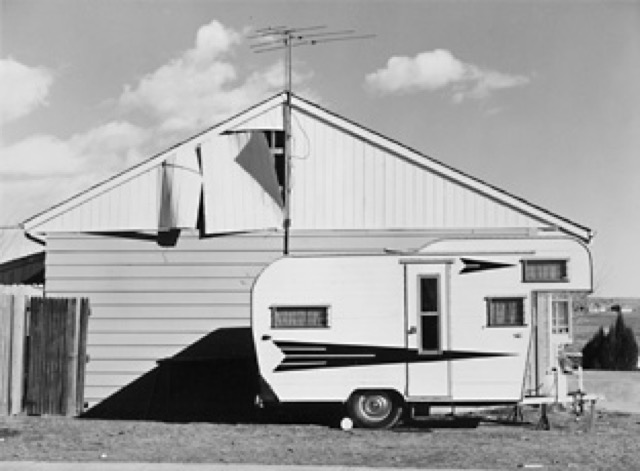
Turns from grand natural scenery to the landscapes people have altered, recording suburbs, graded building sites and industrial zones without heat.
Photobook


.jpg)
Builds its visual narrative across the whole book rather than in single photographs, working with sequence, spreads, margins, text, paper and format.
| New Topographics | Photobook | |
|---|---|---|
| Era | 1975– | 19th century– |
| Family | Photography Movements | Publishing and Editing |
| Kind | Style | Layout |
| Cues | Empty suburbs / Frontality / Dry color / Man-altered landscape | Photographic sequence / Spreads / Repetition and pause / The book as matter |
| Best used for | Recording how a city edge or a graded site changes, year after year, under identical conditions. · Reports and exhibitions that present development as it is, without staging. | Bodies of work that no single frame carries, held together by sequence and pause. · Editing where the passage of time is designed as the speed of turning pages. |
| Type | Captions carry place and date only, in one fixed form, with no comment. | Gather the writing at the front or back, keeping captions out of the flow. |
| Composition | Hold the horizon near the middle and shoot subjects square on at equal distance. | Decide one or two images per spread and use blank pages as rests. |
| Material | Even overcast light, deep focus, processing that never lifts saturation. | Choose paper weight and tone, format, and how flat the binding opens. |
| Caution | Posing as neutral while choosing light and framing too carefully produces scenic photography in documentary clothes, and the change goes unread. | Selecting good photographs without working the order gives a stack and no arc, and readers stop halfway. Design how the time of turning pages and the paper and format change the meaning. |