Japanese Realism Photography vs Provoke
リアリズム写真運動 / プロヴォーク
Both are coarse grained black and white photography from postwar Japan, and both move in close to the site of social life.
How to tell them apart. Realism photography keeps the subject clearly recognizable. Provoke blurs and defocuses until you cannot tell what is in front of the lens.
Japanese Realism Photography


The postwar Japanese movement Domon Ken led under 'absolutely unstaged, absolute snapshots.' Hiroshima and Children of Chikuho faced society directly, drawing amateur monthly contests into the reconnection of photography and life.
Provoke
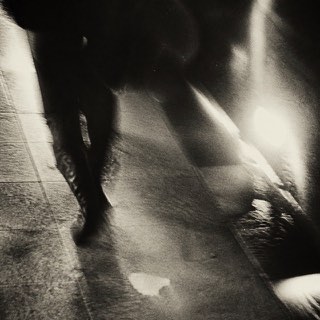
The magazine Provoke called itself provocative materials for thought. Working through are-bure-boke, coarse grain and blur and lost focus, it stripped photography of tidy meaning and gave seeing back its rawness.
| Japanese Realism Photography | Provoke | |
|---|---|---|
| Era | 1950–1958 | 1968–1970 |
| Family | Photography Movements | Photography Movements |
| Kind | Style | Style |
| Cues | The unstaged principle / Social subjects faced directly / Close wide-angle work / Coarse-grained prints | Rough grain (are) / Blur and defocus affirmed / High-contrast black / Fragmentary framing |
| Best used for | Reporting on social issues that requires staying close to the people involved · Setting a shooting standard for open calls and staff-made photography | Photobooks and magazine spreads on the city and the body that permit roughness · Music or clothing campaigns aimed against polished advertising |
| Type | Headlines name the subject plainly, with no metaphor | Type struck over the image and cropped, explanatory captions removed |
| Composition | Move in wide and keep hands and feet inside the frame | Full-bleed spreads with the image cut straight through the gutter |
| Material | Push the film, keep the grain, print on the hard side | Pushed grain and crushed black, tone thrown away in exposure and development |
| Caution | The unstaged principle is proclaimed while the subject is pressed to stay as they are, and the relation between photographer and photographed goes unexamined. | Adding blur and grain afterward as an effect leaves pictures that are merely rough, because nothing changed in how they were taken. |