HarmonyOS Design vs Material You
HarmonyOSデザイン / Material You
HarmonyOS Design comes from Platform Screen Languages and Material You from Google UI. They are reached for with some of the same intent, which is where they get confused.
HarmonyOS Design
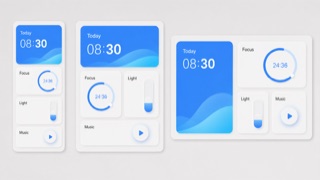
Huawei's visual language reorganizes cards, spacing, arcs, variable type and translucent light materials across different screen sizes and connected devices, favoring continuity of information and action over one fixed screen.
Material You

.jpg)
Material You makes adaptability itself consistent: dynamic color, generous shapes and personalized motion vary by person while semantic roles stay stable.
| HarmonyOS Design | Material You | |
|---|---|---|
| Era | 2019– | 2021– |
| Family | Platform Screen Languages | Google UI |
| Kind | Style | Style |
| Cues | Large rounded cards grouping information by function / Wide space on light fields with a few saturated accents / Arcs, concentric circles and gentle scaling for operation states / Cards and variable type recomposed to suit device size | Harmonized colors derived from wallpaper / Large rounded cards and controls / Selection changes both color and shape / Broad spacing and large display type |
| Best used for | Recomposing the same information across phones, tablets, vehicles and wearables · Explaining continuity across devices through shared cards, motion and hierarchy | Safely reflecting a user's palette in a product · Letting one component system support varied personal appearances |
| Type | Adapt the weight and width of a variable sans to the display and enlarge short headings and numbers. | Keep hierarchy in weight and scale so it survives changes of color. |
| Composition | Group by function; spread cards sideways on wide screens and stack them by importance on small ones. | Set large rounded surfaces in generous space and express selection through shape, color and motion together. |
| Material | Start with bright neutrals, reserve diffusion and translucency for the control layer, and keep one accent family. | Generate tonal palettes from a seed, then assign them to semantic surface and content roles. |
| Caution | Rounded cards alone are not HarmonyOS. Information priority and action continuity must survive the move between devices. | Automatic color generation alone can produce unreadable interfaces. Contrast and semantic roles come first. |