Gurokawa vs Yami Kawaii
グロカワ / 病みかわいい
Both sit in Japanese Street Fashion, so the question is not what they belong to but how they behave. They are reached for with some of the same intent, which is where they get confused.
Gurokawa
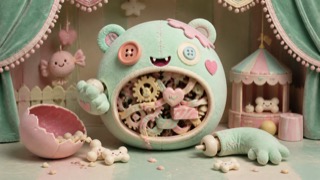
A Japanese grotesque-cute language that places wounds, eyes, bone, blood, or monsters inside kawaii outlines, pastels, and characters, letting cuteness and disturbance coexist on the same body or product surface.
Yami Kawaii
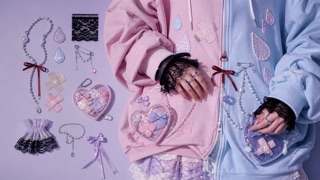
A Japanese fashion and illustration language combining kawaii pastel, round type, and characters with bandages, syringes, pills, tears, and words for distress, using cuteness as an opening for difficult mental-health communication rather than as a way to trivialize illness.
| Gurokawa | Yami Kawaii | |
|---|---|---|
| Era | 2000s– | mid-2010s– |
| Family | Japanese Street Fashion | Japanese Street Fashion |
| Kind | Style | Style |
| Cues | Round characters beside eyes, bone, wounds, or other disturbing motifs / Pastel pink, blue, and white cut by dark red or black / Small anomalies repeated across plush, accessories, and clothing / A cute expression retained while body or background becomes strange | Pastel pink, blue, and white with small red-black accents / Bandages, syringes, pills, plasters, and tears / Round characters beside brief words for pain or isolation / Oversized hoodies, uniform references, and medical-looking accessories |
| Best used for | Opening horror or bodily unease through the accessibility of a cute character · Uniting pastel form and physical disturbance in fashion or image generation | Opening a mental-health conversation without closing it in fear · Ethically holding cute outline and signs of distress together in fashion or illustration |
| Type | Keep type round and transform only one letter or punctuation mark into a wound or eye. | Set brief first-person words in round type; never use diagnoses or medicine names as ornament. |
| Composition | Preserve a central cute form and place only a few disturbing signs at its edge or inside it. | Keep a cute central form, limit medical signs to three, and place readable support information separately. |
| Material | Contrast soft fabric and glossy resin with pastel surfaces and small dark-red or black marks. | Join soft cotton, clear vinyl, and pastel fields with small red signs; never use actual medical tools. |
| Caution | Do not make real injury or disability a joke. Separate the role of kawaii form from grotesque signs instead of merely escalating shock. | Do not romanticize self-harm, medication, or diagnosis. Consult lived experience and support resources, and do not reduce distress to a sellable character. |