French New Wave vs New Wave
ヌーヴェル・ヴァーグ / ニュー・ウェーブ
French New Wave comes from Cinematic Visual Styles and New Wave from Counterculture. They are reached for with some of the same intent, which is where they get confused.
French New Wave
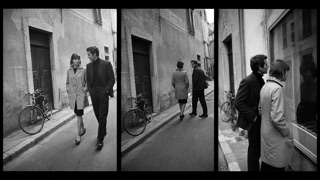
Critics picked up cameras and went out into the street, using handheld shots, jump cuts and self-reference to turn the grammar of film into a playground.
New Wave


Keeps punk's freedom while re-editing color and grid with urban polish.
| French New Wave | New Wave | |
|---|---|---|
| Era | 1958–1968 | 1970s–1980s |
| Family | Cinematic Visual Styles | Counterculture |
| Kind | Style | Style |
| Cues | Handheld camera / Jump cuts / Street locations / Cinema about cinema | Irregular grid / Dots / High chroma / Rotated type |
| Best used for | Low-budget shorts built from nothing but streets and conversation · Work that keeps the maker visible and talks about film itself | Editorial heat for culture media · Adding surprise to serious content |
| Type | Mix handwriting with off-the-shelf type, drop titles casually at the edge | Mix condensed, geometric and vertical setting |
| Composition | Hold long takes without reverses, walk the actors through the street | Shift the grid; hold several angles at once |
| Material | Fast stock in available light, jump cuts that show the seam | Yellow, red, blue, dots, thin rules |
| Caution | Scattering jump cuts and handheld moves as style leaves only the pleasure of breaking rules, and the film stops being about anything. | Don't multiply small decorations. Choose one starring deviation. |