French New Wave vs Italian Neorealism
ヌーヴェル・ヴァーグ / イタリアン・ネオレアリズモ
Both sit in Cinematic Visual Styles, so the question is not what they belong to but how they behave. They are reached for with some of the same intent, which is where they get confused.
French New Wave
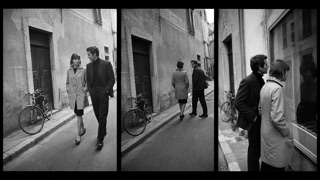
Critics picked up cameras and went out into the street, using handheld shots, jump cuts and self-reference to turn the grammar of film into a playground.
Italian Neorealism

.jpg)
%20lustrascarpe.png)
Cinema that left the studio to film non-professional actors in the street, taking postwar poverty and daily life as its subject and standing on the side of reality.
| French New Wave | Italian Neorealism | |
|---|---|---|
| Era | 1958–1968 | 1943–1952 |
| Family | Cinematic Visual Styles | Cinematic Visual Styles |
| Kind | Style | Style |
| Cues | Handheld camera / Jump cuts / Street locations / Cinema about cinema | Location shooting / Non-professional actors / Available light / Postwar streets |
| Best used for | Low-budget shorts built from nothing but streets and conversation · Work that keeps the maker visible and talks about film itself | Showing everyday work and streets through the faces of the people there · Social-issue film that must shoot on location without prettifying its subjects |
| Type | Mix handwriting with off-the-shelf type, drop titles casually at the edge | Keep titles plain and let the filmed thing speak instead |
| Composition | Hold long takes without reverses, walk the actors through the street | Place people small inside the street, keep the surrounding life in frame |
| Material | Fast stock in available light, jump cuts that show the seam | Shoot in available light, hold shadow detail in a grainy scale |
| Caution | Scattering jump cuts and handheld moves as style leaves only the pleasure of breaking rules, and the film stops being about anything. | Filming poverty as raw material for a look reduces the people to texture, which inverts the whole premise of standing on the side of reality. |