Fluxus vs Gutai
フルクサス / 具体美術協会
Fluxus comes from Avant-garde and Gutai from Japanese Postwar Avant-garde. They are reached for with some of the same intent, which is where they get confused.
Fluxus


Values the act and the participation above the finished piece, working in scores, boxes, cheap multiples, performances and events until the border between art and daily life gives way.
Gutai
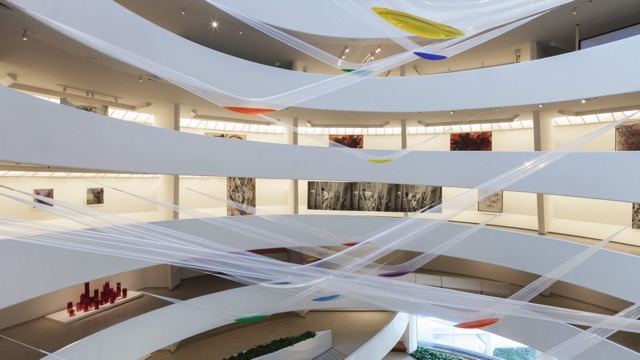


Acts directly on body, mud, paper, water, smoke and light bulbs, making the work an event in which spirit does not master material and each exposes the nature of the other.
| Fluxus | Gutai | |
|---|---|---|
| Era | early 1960s–late 1970s | 1954–1972 |
| Family | Avant-garde | Japanese Postwar Avant-garde |
| Kind | Style | Style |
| Cues | Event scores / Boxes and multiples / Everyday actions / Anti-art humor | Body colliding with material / Outdoor exhibitions / Tearing, throwing, treading / Participation and play |
| Best used for | Works and programs written as instructions that exist only when someone performs them. · Cheap multiples boxed and circulated hand to hand as small scale publishing. | Public making and performance where the process and its traces are what is shown. · Outdoor or temporary shows that let the audience feel material meeting body. |
| Type | Write each instruction as one imperative line and print it still open to reading. | Keep records to date and act described, adding no meaning through a title. |
| Composition | One item per card, with the order of the deck left unfixed. | Put the work outdoors or in a passage, letting viewers set their distance. |
| Material | Found objects, paper, wooden boxes, cheap printing, no signature or scarcity. | Mud, paper, water, bulbs and paint, keeping the marks of tearing and treading. |
| Caution | Imitating random instructions and plain boxes settles nothing about ownership, authority and the audience's role, and a score framed on the wall without ever being performed loses the premise of action and participation. | Restaging the physical gesture without responding to what the material does leaves only spectacle. Read the thought behind it, postwar Japan, the autonomy of material and the audience taking part. |