Fashion Deconstruction vs Punk Fashion
ファッションの脱構築 / パンク・ファッション
Fashion Deconstruction comes from Fashion History and Punk Fashion from Subculture Style. They are reached for with some of the same intent, which is where they get confused.
Fashion Deconstruction
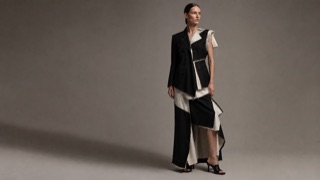
Exposes seam allowance, lining, raw edge, pattern and asymmetric joining instead of hiding clothing as a seamless whole. It does not merely destroy; it dismantles conventions and builds a different body from their parts.
Punk Fashion

Punk fashion grew from 1970s music, shops and street culture, cutting, fastening and rewriting ready-made clothing into a confrontational message that included body and hair. DIY alteration, restraint hardware, metal and slogans made dress an editable medium rather than a finished commodity.
| Fashion Deconstruction | Punk Fashion | |
|---|---|---|
| Era | 1980s– | mid-1970s– |
| Family | Fashion History | Subculture Style |
| Kind | Style | Style |
| Cues | Seam allowances and lining turned outward / Raw edges and deliberate fraying / Asymmetric joins and displaced balance / Patterns and interfacing treated as finished surfaces | Torn T-shirts with exposed seams and fasteners / Safety pins, chains, zips and bondage hardware / Handwritten slogans, band names and repurposed insignia / Upright hair, hard makeup and body piercings |
| Best used for | Collections where garment structure and making are the subject · Clothes and displays that value assembly and repair traces over polished finish | Making an editable sign of belonging and opposition for music, protest or club settings · Reversing the meaning of ready-made clothes, uniforms and insignia by cutting, joining and overwriting them |
| Type | Leave labels, basting thread and pattern notation visible as part of the structure. | Cut existing logos and newspaper lettering into handwritten words and uneven joins. Name the target of a slogan rather than substituting generic rebellion. |
| Composition | Break symmetry so joins and excess cloth draw another contour around the body. | Concentrate tears, metal and text in one part of the body and support it with worn utility clothing. Design hair and posture as part of the full silhouette. |
| Material | Expose lining, interfacing, seams and cut edges so the order of assembly can be read. | Cut, pin and resew secondhand cotton, leather and tartan with metal and permanent ink. Keep dangerous hardware off skin and verify wear safety. |
| Caution | Torn and frayed cloth alone is not deconstruction. The viewer must see what convention was dismantled and what replaced it. | A new set of safety pins, tartan and a mohawk becomes costume. Separate it from Punk graphics and retain who objects to what and how the wearer altered the garment. |