Editorial Collage vs 80’s Editorial
エディトリアル・コラージュ / 80年代エディトリアル
Both sit in Publishing and Editing, so the question is not what they belong to but how they behave. One is technique and the other style. They are reached for with different intent, which is the fastest way to tell them apart.
Editorial Collage
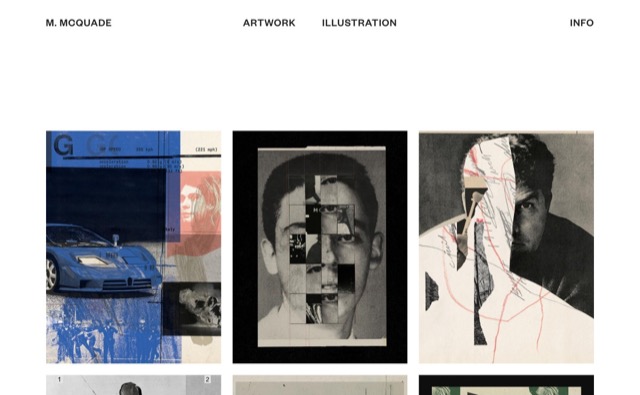


Layers fragments from different times and contexts, showing the editor's point of view before any explanation.
80’s Editorial

Builds quiet but certain authority from white space and photographic scale.
| Editorial Collage | 80’s Editorial | |
|---|---|---|
| Era | contemporary | 1980s |
| Family | Publishing and Editing | Publishing and Editing |
| Kind | Technique | Style |
| Cues | Cut-out photographs / Mixed scales / Collision with white space / Annotations | High-contrast serifs / Bold photography / Wide margins / Hairline rules |
| Best used for | Implying an article's argument in one image · Giving found material a new reading | Elevating fashion and culture · Making an editorial point of view felt |
| Type | A disciplined text face with large pull quotes | High-contrast serif with a small companion sans |
| Composition | Choose the leading fragment; layer the rest before and behind | Crop photographs boldly; set type quietly |
| Material | Photos, scraps, hand-drawn lines; leave the cut edges visible | Black-and-white photography, cream paper, black |
| Caution | Don't just add material. Be able to say what every fragment means. | Type that is too small is a barrier, not a mood. Check legibility at real size. |