Angura Poster vs Shōwa Modern
アングラ演劇ポスター / 昭和モダン
Angura Poster comes from Regional Graphics and Shōwa Modern from Advertising Posters. They are reached for with some of the same intent, which is where they get confused.
Angura Poster
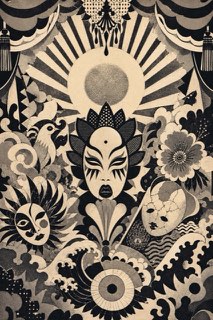
Yokoo Tadanori and his peers printed the posters for Situation Theatre and Tenjō Sajiki. Ukiyo-e, kitsch and psychedelia collide there in an excess that the world discovered as a revolt against modernism.
Shōwa Modern


Prewar Japan's commercial modernism, typified by Sugiura Hisui's Mitsukoshi and subway posters: Deco crossed with nihonga, the modern girl's city and refined lettering drawing the dawn of consumer culture.
| Angura Poster | Shōwa Modern | |
|---|---|---|
| Era | 1965–1975 | 1920s–1930s |
| Family | Regional Graphics | Advertising Posters |
| Kind | Style | Style |
| Cues | Ukiyo-e colliding with kitsch / Fluorescent silkscreen / Rising suns and Shōwa imagery détourned / The aesthetics of excess | Deco crossed with nihonga / The modern girl's city / Stylized lettering / Department stores and transit |
| Best used for | Small-theatre and experimental performance bills that must defy respectable style · Work quoting Showa-era imagery and stopping a passerby through sheer excess | Department store and event bills selling a city mood, not merchandise · Rail and tourism advertising that must carry the lift of going out |
| Type | Mincho, sign lettering and Latin colliding on one surface, alignment broken on purpose | Kana stylized and thickened, set vertically without Latin mixed in |
| Composition | One image at the center, the surround packed with detail and no white left | A figure cropped to the torso, background ordered by geometric bands |
| Material | Silkscreen including fluorescents, with metallics and spot colors overlaid | Flat color holding nihonga pigment murk, contours tightened by thin line |
| Caution | Merely piling quotations turns excess into clutter and buries the title and dates the bill exists to announce. | Setting Deco ornament beside a kimono without the newness that city once had produces a period costume rather than a modern poster. |