New Color Photography vs Snapshot Aesthetic
ニューカラー / スナップショット美学
New Color Photography comes from Photography Movements and Snapshot Aesthetic from Photographic Genres. They are reached for with some of the same intent, which is where they get confused.
New Color Photography
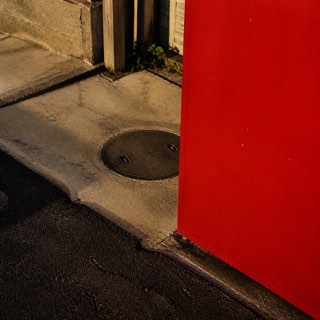
The art photography of the everyday in color, legitimized by Eggleston's MoMA show. Dye-transfer density gave banal scenes gravity and overturned the rule that color was vulgar.
Snapshot Aesthetic
%20at%20the%20Alexander%20Palace%2C%201914.jpg)

.jpg)
An aesthetic that takes the failures of amateur photography since Kodak, the tilted horizon, the head cut off at the edge, the flatness of the flash, and claims them on purpose. The intimacy of the family album became a grammar for art photography from Winogrand to Goldin.
| New Color Photography | Snapshot Aesthetic | |
|---|---|---|
| Era | 1976– | 1888– / 1960s art adoption |
| Family | Photography Movements | Photographic Genres |
| Kind | Style | Style |
| Cues | Nameless everyday scenes / Dye-transfer saturation / Casual oblique composition / The intensity of red | Tilted framing / Subjects cut by the frame / Direct flash / Album intimacy |
| Best used for | Advertising that shows ordinary goods and storefronts through color rather than staging · Photobooks on suburbs and small cities where the banal is the subject | Advertising for everyday products that must not smell of a set · Private records of friends and family kept up over many years |
| Type | Captions carry only place and year, never explanation | No type, or at most a scrawl on the back of a print |
| Composition | Tilt off horizontal and push the subject toward an edge | Leave the horizon crooked and keep figures cut by the frame |
| Material | Let one red run dense while the rest stays faded | Direct flash with its hard shadow, color left uncorrected |
| Caution | Raising saturation gets mistaken for the style, so the choice of subject goes unexamined and the pictures end up loud but with no reason to look. | The harder amateurism is staged, the more it shows, and the absence of real time spent with the subject becomes the only thing visible. |