Mod vs Teddy Boys
モッズ / テディボーイズ
Working class British youth after the war, standing in the street in a tailored suit with the hair kept in order.
How to tell them apart. Teds wear a jacket down to the thigh and crepe soled shoes. Mods wear a short narrow three button jacket under a parka.
Mod


Slim Italian suits, scooters and modern jazz made a rebellion carried out through refinement, and completed the marriage of consumerism and youth culture.
Teddy Boys

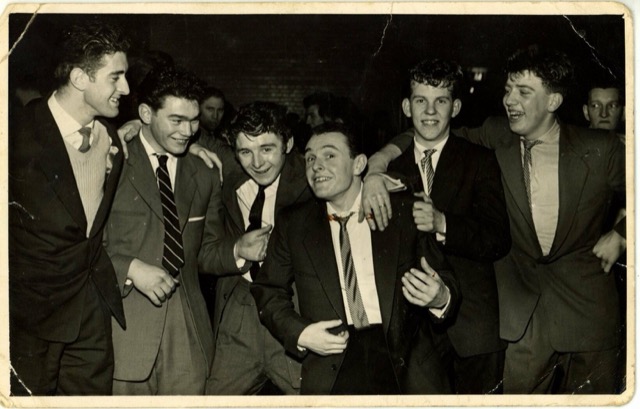

Working-class youths appropriated Edwardian upper-class dress. Postwar Britain's first youth subculture, it set the pattern for every youth culture that followed.
| Mod | Teddy Boys | |
|---|---|---|
| Era | late 1950s–1960s | 1950s– |
| Family | Subculture Style | Subculture Style |
| Kind | Style | Style |
| Cues | Slim three-button suits / Military parkas / Scooters and mirrors / The target roundel | Long drape jackets / Slim ties / Crepe-soled shoes / The quiff |
| Best used for | Dressing a group that competes on the accuracy of small details · A light outer layer that survives city travel and long nights | Borrowing dress from a higher class and shifting what it means · Building a group look tied to music through agreed details |
| Type | Pick one mark, a roundel or an arrow, and use only that | No lettering, the hair and the shoe declare the affiliation |
| Composition | Keep a narrow line from shoulder to knee, broken once by the parka | Drop the jacket long and add contrast collar and cuffs to stress the vertical |
| Material | Mohair sheen, slim three button cut, waterproof parka, chromed mirrors | Thick crepe soles, narrow woven ties, cloth that takes a drape |
| Caution | Assuming that a roundel and a scooter are enough drops the precision of cut the style actually rests on, leaving a pile of signs. | The more carefully the Edwardian detail is reproduced the more authentic it looks, and the joke about class quietly disappears. |