Liminal Space vs Tableau Photography
リミナル・スペース / タブロー写真
Liminal Space comes from Internet Aesthetics and Tableau Photography from Photography Movements. One is aesthetic and the other style. They are reached for with some of the same intent, which is where they get confused.
Liminal Space


Photographs transitional spaces empty when people ought to be in them, drawing out déjà vu, loneliness and the sense that time has stopped. The subjects carry their own names in circulation, from the empty indoor pool to the night corridor to the mall after closing.
Tableau Photography
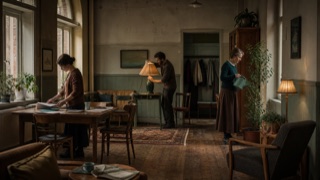
Assembles the scene before the shutter and holds it in a single print made to hang like a painting, its figures acting as if no viewer were there.
| Liminal Space | Tableau Photography | |
|---|---|---|
| Era | late-2010s– | 1970s |
| Family | Internet Aesthetics | Photography Movements |
| Kind | Aesthetic | Style |
| Cues | Empty corridors / Fluorescent light / Dated interiors / Public space after midnight | A single large print made to hang / Figures who never look back at you / Interiors and streets built to the last corner / Lighting borrowed from cinema |
| Best used for | Photographing empty facilities at night to show that time has stopped · Choosing settings for work about waiting and passing through | Restaging the conventions of advertising or news images to cast doubt on them · Building a story into one frame meant for exhibition, not for record |
| Type | Keep the existing wayfinding signs and add no new lettering | Make the text in the frame as a prop rather than borrowing a typeface |
| Composition | Shoot corridors head on in one point perspective with nobody present | Fix gaze and hand positions in advance and block the frame like a painting |
| Material | Greenish fluorescent white, dated flooring, damp reflections, weak shadows | Built sets or models, cinematic lighting, large format shot and printed big |
| Caution | The more unusual the building, the less it touches memory, because the sense of having been here only arrives in ordinary places everyone has passed through. | Staging that only imitates a natural record leaves the assumption that photographs record reality untouched, and the whole reason for constructing the scene disappears. |