Gutai vs Viennese Actionism
具体美術協会 / ウィーン・アクショニズム
Gutai comes from Japanese Postwar Avant-garde and Viennese Actionism from Modern and Contemporary Art Movements. They are reached for with some of the same intent, which is where they get confused.
Gutai
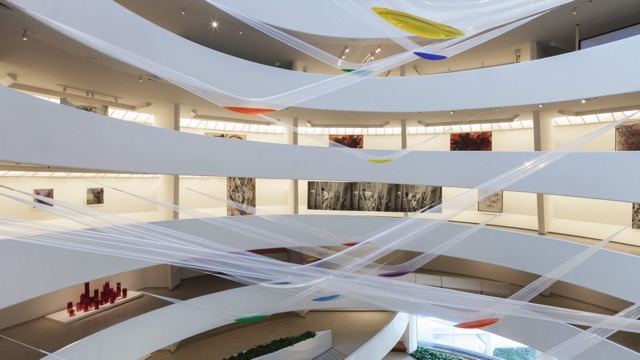


Acts directly on body, mud, paper, water, smoke and light bulbs, making the work an event in which spirit does not master material and each exposes the nature of the other.
Viennese Actionism
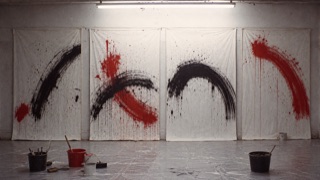
A postwar Austrian movement that expanded painterly gesture into ritualized actions with bodies, liquid, cloth, organic matter, photography, and film; repeated lines, splashes, binding, and documentation form its visual core.
| Gutai | Viennese Actionism | |
|---|---|---|
| Era | 1954–1972 | 1960s–early 1970s |
| Family | Japanese Postwar Avant-garde | Modern and Contemporary Art Movements |
| Kind | Style | Style |
| Cues | Body colliding with material / Outdoor exhibitions / Tearing, throwing, treading / Participation and play | Black or red liquid against a white body or cloth / Bodies divided by bandage, rope, and geometric line / Grainy frontal photographic or film documentation / Ritual repetition and extreme bodily action |
| Best used for | Public making and performance where the process and its traces are what is shown. · Outdoor or temporary shows that let the audience feel material meeting body. | Presenting 1960s body-based performance history together with its recording media · Comparing how painting moved from object into ritual, action, and duration |
| Type | Keep records to date and act described, adding no meaning through a title. | Keep neutral record information separate from the action and avoid sensational headlines. |
| Composition | Put the work outdoors or in a passage, letting viewers set their distance. | Document the whole body, material contact, and chronology from a fixed viewpoint. |
| Material | Mud, paper, water, bulbs and paint, keeping the marks of tearing and treading. | For contemporary interpretation, design safe substitutes, consent, hygiene, and exit conditions; do not reenact dangerous originals. |
| Caution | Restaging the physical gesture without responding to what the material does leaves only spectacle. Read the thought behind it, postwar Japan, the autonomy of material and the audience taking part. | Do not imitate shock images or intervene on bodies without consent. Treat this as difficult history and address injury, animal welfare, law, and trauma. |
Japanese Postwar Avant-garde / Modern and Contemporary Art Movements