Glitch vs The New Aesthetic
グリッチ / ニュー・エステティック
Glitch comes from UI Expression and The New Aesthetic from Digital Culture. One is style and the other aesthetic. They are reached for with some of the same intent, which is where they get confused.
Glitch

%20sample%20animation.gif)
Refuses to hide error and corruption, exposing the fragility of the digital medium itself.
The New Aesthetic
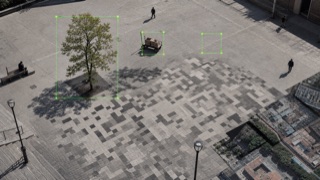
James Bridle's New Aesthetic names the way machine vision and network imagery leak into physical culture through pixels, satellite views, detection boxes and sensor errors.
| Glitch | The New Aesthetic | |
|---|---|---|
| Era | digital | 2011– |
| Family | UI Expression | Digital Culture |
| Kind | Style | Aesthetic |
| Cues | Channel shift / Block noise / Scanlines / Dropout | Pixels enlarged onto physical objects / Recognition rectangles and coordinates / Satellite, map and surveillance viewpoints / Compression, omission and machine misclassification |
| Best used for | Expressing uncertainty and system failure · A jolt of tension in music and video | Critically visualizing AI, surveillance and mapping · Showing where human and machine perception diverge |
| Type | Partially corrupt a monospace or plain sans | Set coordinates, labels and confidence scores on a separate layer from human explanation. |
| Composition | Build the healthy composition first, then break part of it | Overlay detection boxes, tracks and map tiles to expose the machine's field of judgment. |
| Material | RGB shift, compression noise, missing pieces | Leave low resolution, compression and sensor output visibly unresolved. |
| Caution | Perpetual glitch loses meaning. Stage the difference between normal and broken. | Pixels and detection boxes used only as futuristic decoration erase the politics of who classifies whom. |