Glam Rock Fashion vs Peacock Revolution
グラムロック・ファッション / ピーコック・レボリューション
Both sit in Fashion History, so the question is not what they belong to but how they behave. They are reached for with some of the same intent, which is where they get confused.
Glam Rock Fashion

Early-1970s British rock used glitter, platforms, emphatic makeup, body-fitting clothes and quotations from science fiction and cabaret to turn performers into deliberately artificial stars separated from everyday life.
Peacock Revolution
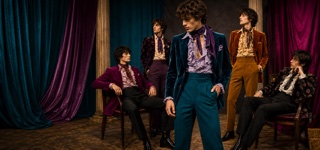
The Peacock Revolution released postwar menswear from the dark suit, spreading close tailoring, vivid color, velvet, frills and flowers into young men's street and stage dress while modern dandyism unsettled gender and class rules.
| Glam Rock Fashion | Peacock Revolution | |
|---|---|---|
| Era | 1971–1975 | mid-1960s–early 1970s |
| Family | Fashion History | Fashion History |
| Kind | Style | Style |
| Cues | Glitter, sequins and metallic shine / Platform boots and fitted jumpsuits / Strong eye makeup, colored hair and facial geometry / Science fiction, Hollywood, cabaret and music hall mixed together | Close-fitting jackets and high waists / Bold velvet, satin, floral print and vivid color / Frilled shirts, scarves, wide collars and cuffs / Long hair and heels within a delicate decorated male silhouette |
| Best used for | Presenting a performer as an artificial star in live shows and cover imagery · Using excessive clothing and makeup to blur borders of gender and period | Returning color, pattern and soft material to tailored menswear · Questioning conventional masculinity through a flamboyant outline in music and advertising |
| Type | Choose either heavy rock lettering or a narrow science-fiction face and pair it with a metallic edge. | Place a narrow serif or 1960s display face away from collars and frills. |
| Composition | Emphasize the vertical full-body line, building one silhouette from platforms through the hair. | Tailor shoulder and torso closely, concentrating detail at collar, cuff and scarf. |
| Material | Reflect glitter, sequins, satin and metallic foil hard under stage lighting; paint the same geometry on the face. | Use velvet, satin, floral print and bright wool, keeping black only to sharpen edges. |
| Caution | Glitter and platforms alone make a 1970s costume. Build the performer's artificial persona through sound, stance and makeup too. | A bright suit alone does not explain the revolution. Align tailoring, material, hair and jewelry as a reversal of menswear norms. |