Dungeon Synth Cover Art vs Witch House Graphics
ダンジョン・シンセ・カバーアート / ウィッチ・ハウス・グラフィックス
Dungeon Synth Cover Art comes from Music Graphics and Witch House Graphics from Internet Aesthetics. They are reached for with some of the same intent, which is where they get confused.
Dungeon Synth Cover Art
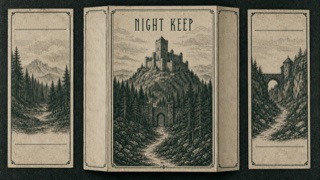
A cover-art system around dungeon synth, which emerged from the early-1990s black-metal milieu and gathers castles, ruins, forests, ancient kingdoms and chivalric imagery onto cassettes and small-scale releases. It does not reconstruct one historical period; it compresses a mixed pre-modern imaginary into a landscape and a physical object that opens onto the music's fictional world.
Witch House Graphics
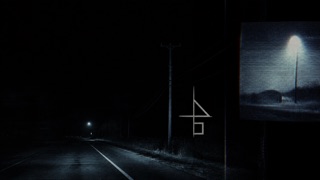
A 2009–2012 visual system that joined crushed night photography, treated found video, VHS decay and deliberately obstructed type into one Tumblr- and blog-circulated identity. Its form comes from digital obscurity and repetition, not from occult props alone.
| Dungeon Synth Cover Art | Witch House Graphics | |
|---|---|---|
| Era | early 1990s– | 2009–2012 |
| Family | Music Graphics | Internet Aesthetics |
| Kind | Style | Style |
| Cues | A pre-modern landscape combining a castle, ruin, forest or mountain path into one distant view / Fine lines recalling woodcut, engraving or old illustration, limited to black, parchment and deep green / A central image that survives a small cassette face, with a thin frame and short vertical title hierarchy / One fictional world continued across J-card, handmade label and folded booklet | Crushed night photography in black, gray, blue and bone / Treated-video frames with scanlines, color bleed or vertical drag / Short names slowed by substituted glyphs and geometric characters / A repeated low-resolution image held at a distance by large black fields |
| Best used for | Condensing a fictional world for music or games into one landscape and a small physical object · Connecting cassette, streaming thumbnail and booklet as fragments of the same geography and story | Extending music, short video and event imagery into one dark online identity · Using night photographs and low-resolution video to design distance and obscurity rather than a literal horror story |
| Type | Keep the title to one or two words, with a fine serif or blackletter near the upper edge; separate explanatory copy into a readable modern face. | Obstruct only the short name with substituted glyphs; preserve searchable plain text for body copy, date and access information. |
| Composition | Place one distant castle or forest at the center and lead the eye with a foreground road or gate. Set the J-card folds first and do not let them cut the focal image. | Enlarge one night image or treated-video frame, leave a wide black field and offset the short name from center. |
| Material | Use public-domain or newly made landscape art, reduced to woodcut-like fine lines, copier black, parchment and deep green at a density that survives cassette size. | Choose one or two of VHS scanlines, compression, copier loss or color bleed and apply the same degradation rule to still and motion. |
| Caution | A medieval castle alone is not dungeon synth. Sound, title and medium must build one fictional world. Do not use imagery from existing games or fantasy works, unprovenanced heraldry or runes, or extremist symbols as shortcuts to atmosphere. | Do not label every dark, occult, Gothic or horror image Witch House. Network circulation, treated media and typographic obstruction must coincide; do not remove religious symbols from context or reuse found footage without rights. |