Direct Cinema vs Italian Neorealism
ダイレクト・シネマ / イタリアン・ネオレアリズモ
Both sit in Cinematic Visual Styles, so the question is not what they belong to but how they behave. They are reached for with some of the same intent, which is where they get confused.
Direct Cinema
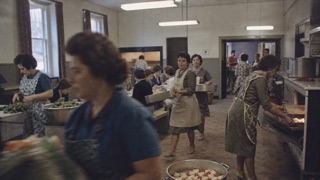
A documentary-film style using lightweight cameras, synchronous sound, and small crews to follow events with minimal intervention. It restrains explanatory narration, reenactment, and excessive lighting so handheld distance, location sound, and observation reveal relationships.
Italian Neorealism

.jpg)
%20lustrascarpe.png)
Cinema that left the studio to film non-professional actors in the street, taking postwar poverty and daily life as its subject and standing on the side of reality.
| Direct Cinema | Italian Neorealism | |
|---|---|---|
| Era | late 1950s–1970s | 1943–1952 |
| Family | Cinematic Visual Styles | Cinematic Visual Styles |
| Kind | Style | Style |
| Cues | Small handheld movement and in-the-moment framing / Location sound with restrained narration and music / People observed in action rather than seated in interview sets / Longer shots preserving before and after, with uneven exposure | Location shooting / Non-professional actors / Available light / Postwar streets |
| Best used for | Understanding institutions, work, or backstage life through continuous action · Showing a decision or relationship changing through observation and location sound | Showing everyday work and streets through the faces of the people there · Social-issue film that must shoot on location without prettifying its subjects |
| Type | Limit captions to names, place, and date; do not announce the filmmaker's conclusion first. | Keep titles plain and let the filmed thing speak instead |
| Composition | Stay near the subject's eye level, preserve whole actions, and keep entrances and exits in frame. | Place people small inside the street, keep the surrounding life in frame |
| Material | Build from available light, synchronous location sound, and handheld capture without polishing away every fluctuation. | Shoot in available light, hold shadow detail in a grainy scale |
| Caution | Hidden capture and absent narration do not guarantee truth. Address consent, vulnerable subjects, editorial causality, and immediate danger explicitly. | Filming poverty as raw material for a look reduces the people to texture, which inverts the whole premise of standing on the side of reality. |