Czech Film Poster vs Polish Poster School
チェコ映画ポスター / ポーランド・ポスター派
Film posters from the same years in Eastern Europe, both hand lettered single images that are painted rather than photographed.
How to tell them apart. Poland narrows to one coarsely painted image. The Czech poster brings in cut and pasted collage and distorted photographs.
Czech Film Poster


Turns film promotion into independent interpretation through collage, fantastical rendering and experimental letters.
Polish Poster School
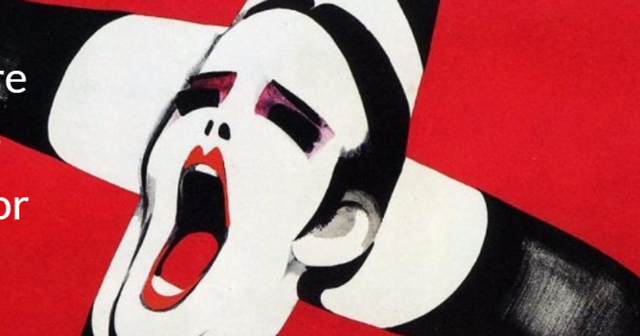
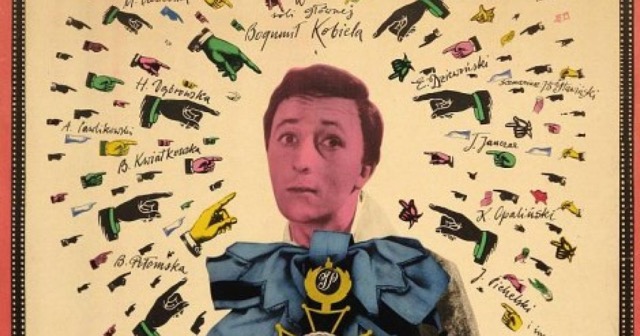

Rather than explain a film or a play, it turns the assignment into a psychological image built from painting, metaphor and hand-drawn letters.
| Czech Film Poster | Polish Poster School | |
|---|---|---|
| Era | 1950s–1980s | 1950s–1980s |
| Family | Regional Graphics | Regional Graphics |
| Kind | Style | Style |
| Cues | Surreal collage / Drawn letters / Symbols / Transformed photography | Symbolic metaphor / Hand-drawn lettering / Rough paint surface / One strong image |
| Best used for | Film announcements where you interpret the work instead of using supplied stills · Promoting stories of fantasy or unease through transformed photography | Promoting a film or a play through one metaphor instead of its plot · Series for a theatre or a festival, each sheet drawn differently by hand |
| Type | Drawn titles stretched or crushed with the same distortion as the image | Draw the title by hand in the same stroke as the image |
| Composition | Join fragments at different scales so the eye gathers on one symbol | One strong image near the center with nothing competing around it |
| Material | Cut printed photographs, painted additions, replaced colors, seams left visible | Rough brush and ink surface, few colors, tears and bleed left in |
| Caution | The more strange combinations you add, the more the focus scatters, until neither the film nor your reading of it comes across. | Leaning on star faces or film stills kills the metaphor, and roughening the surface alone leaves decoration with nothing behind it. |