Angura Poster vs Ukiyo-e
アングラ演劇ポスター / 浮世絵
Angura Poster comes from Regional Graphics and Ukiyo-e from Japanese Woodblock Prints. They are reached for with some of the same intent, which is where they get confused.
Angura Poster
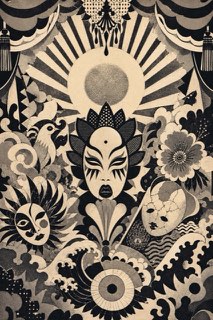
Yokoo Tadanori and his peers printed the posters for Situation Theatre and Tenjō Sajiki. Ukiyo-e, kitsch and psychedelia collide there in an excess that the world discovered as a revolt against modernism.
Ukiyo-e


Fixes a passing moment of daily life or landscape into strong composition with contour, flat color and daring crops.
| Angura Poster | Ukiyo-e | |
|---|---|---|
| Era | 1965–1975 | 17th–19th century |
| Family | Regional Graphics | Japanese Woodblock Prints |
| Kind | Style | Style |
| Cues | Ukiyo-e colliding with kitsch / Fluorescent silkscreen / Rising suns and Shōwa imagery détourned / The aesthetics of excess | Clear outlines / Flat color / Bold cropping / Overlapping space |
| Best used for | Small-theatre and experimental performance bills that must defy respectable style · Work quoting Showa-era imagery and stopping a passerby through sheer excess | Giving daily scenes a symbolic composition · Showing depth by overlap instead of realism |
| Type | Mincho, sign lettering and Latin colliding on one surface, alignment broken on purpose | Brush letters or a disciplined mincho fitting the subject; no meaningless Japanese |
| Composition | One image at the center, the surround packed with detail and no white left | Cut the foreground boldly; set a jump in scale against the distance |
| Material | Silkscreen including fluorescents, with metallics and spot colors overlaid | Keylines and few color blocks; use the paper as one of the colors |
| Caution | Merely piling quotations turns excess into clutter and buries the title and dates the bill exists to announce. | Not a kit of 'Japanese-style' signs. Research the artist, carver, printer, period and subject. |