Angura Poster vs Shin-Hanga
アングラ演劇ポスター / 新版画
Angura Poster comes from Regional Graphics and Shin-Hanga from Japanese Woodblock Prints. They are reached for with some of the same intent, which is where they get confused.
Angura Poster
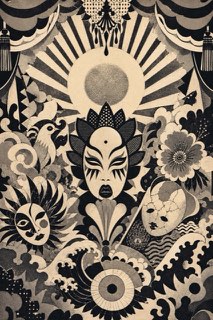
Yokoo Tadanori and his peers printed the posters for Situation Theatre and Tenjō Sajiki. Ukiyo-e, kitsch and psychedelia collide there in an excess that the world discovered as a revolt against modernism.
Shin-Hanga


The woodblock revival led by publisher Watanabe Shōzaburō: ukiyo-e's carver-printer division joined to Western light and atmosphere. Hasui's nights and rains became the beloved image of a lyric Japan abroad.
| Angura Poster | Shin-Hanga | |
|---|---|---|
| Era | 1965–1975 | 1915–1960s |
| Family | Regional Graphics | Japanese Woodblock Prints |
| Kind | Style | Style |
| Cues | Ukiyo-e colliding with kitsch / Fluorescent silkscreen / Rising suns and Shōwa imagery détourned / The aesthetics of excess | The lyricism of night and rain / Western treatment of light / Precision of the carver-printer system / Landscapes of travel |
| Best used for | Small-theatre and experimental performance bills that must defy respectable style · Work quoting Showa-era imagery and stopping a passerby through sheer excess | Travel and hospitality imagery built on quiet landscape feeling · Limited print editions and seasonal book covers or packaging |
| Type | Mincho, sign lettering and Latin colliding on one surface, alignment broken on purpose | Keep lettering out of the image, at the margin or the seal position |
| Composition | One image at the center, the surround packed with detail and no white left | Low horizon, a single light source, the foreground sunk into dark |
| Material | Silkscreen including fluorescents, with metallics and spot colors overlaid | Graded bokashi on washi, rain lines carved thin on a separate block |
| Caution | Merely piling quotations turns excess into clutter and buries the title and dates the bill exists to announce. | Chasing only the mood of night and rain misses the tonal precision the carver and printer supply, and leaves nostalgia for a motif. |