Acubi vs Y2K
アクビ / ワイツーケー
Acubi comes from Fashion History and Y2K from Digital Retro. They are reached for with some of the same intent, which is where they get confused.
Acubi
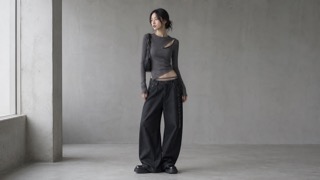
A Korean online-retail and Gen Z style that keeps Y2K's slim, low-rise silhouette while muting it into grey, black, white, translucent layers, cropped tops, boleros, and asymmetric seams.
Y2K


.jpg)
Expresses optimism for the new millennium in translucent plastic and rounded futures. Its shine comes from resin and metal you could hold rather than from a screen, which separates it from the interface gloss of the same years.
| Acubi | Y2K | |
|---|---|---|
| Era | late 2010s–2020s | late 1990s–2000s |
| Family | Fashion History | Digital Retro |
| Kind | Style | Style |
| Cues | Muted grey, black, white, and dusty blue / Cropped top and low-rise elongated silhouette / Thin layering of mesh sleeve, camisole, and bolero / Asymmetric hems, cutouts, and small silver hardware | Translucent plastic / Silver / Bubble forms / Cyber brightness |
| Best used for | Keeping Y2K lines while removing loud color and logos from everyday styling · Making narrow layers and negative space the focus of fashion e-commerce photography | A light futurity for fashion and youth culture · Tech expression that isn't too serious |
| Type | Use a narrow small sans-serif with one fine metallic line. | Rounded extended faces, pixel accents |
| Composition | Offset a short outer layer over a longer translucent one, keep the waist low, and preserve vertical length. | Floating ellipses with a centered logo |
| Material | Layer thin jersey, mesh, rib, and matte nylon in grey-black with very small metal accents. | Aqua, lime, silver, transparency |
| Caution | Not every grey Y2K outfit is Acubi. Keep the Korean circulation context and the combination of low saturation, slim line, and thin layering. | Don't lean on chrome and butterflies. Put the era's optimism into the message too. |